Enhancing Early Learning Through Visual Education Illustrations
In the rapidly evolving landscape of digital education, visual assets have become more than just decorative elements; they are fundamental tools for cognitive development. The Illustration of Education for Children serves as a critical bridge between abstract concepts and tangible understanding for young minds. Whether utilized in preschool kindergartens, mobile learning applications, or interactive web banners, these visuals play a pivotal role in how children process information, particularly in foundational subjects like mathematics.
This article explores the multifaceted value of educational illustrations, focusing on their application in teaching counting and numbers. We will examine why flat character vector illustrations are preferred by designers and educators alike, discuss the technical benefits of editable EPS 10 files, and provide guidance on integrating these assets into various digital and print mediums.
The Cognitive Power of Visual Learning in Early Childhood
Children, especially those in the preschool and kindergarten age groups, are predominantly visual learners. Their brains are wired to interpret images faster than text, making illustrations an essential component of effective pedagogy. When introducing complex ideas such as mathematic lessons to count and number, a well-designed illustration can simplify the learning curve significantly.
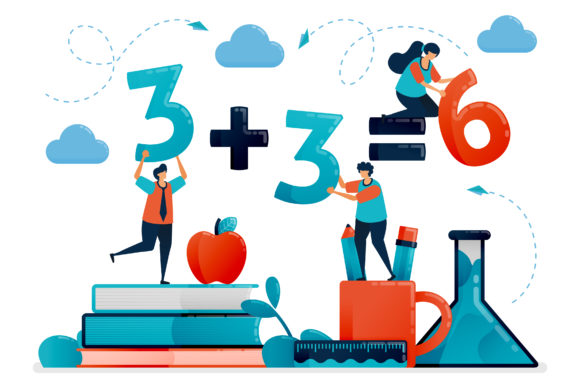
An Illustration of Education for Children does more than capture attention; it creates context. For instance, seeing a cheerful character holding three apples helps a child associate the numeral "3" with a physical quantity. This association is crucial for developing numeracy skills. By embedding these visuals into landing pages, web interfaces, and mobile apps, educators and developers can create immersive environments where learning feels like play rather than work.
Why Flat Character Vector Illustrations?
Among the myriad of artistic styles available, flat character vector illustrations have emerged as the gold standard for modern educational content. There are several reasons for this preference:
- Clarity and Simplicity: Flat design removes unnecessary details, shadows, and textures that can distract young learners. The clean lines and bold colors help children focus on the core subject matter, such as the numbers being counted.
- Scalability: Vector graphics are resolution-independent. This means an illustration can be scaled from a small icon on a mobile app to a large poster on a classroom wall without losing quality. This versatility is invaluable for creators who need consistent branding across multiple platforms.
- Engagement: Flat characters often feature expressive faces and dynamic poses. These human-like or animal-like figures create an emotional connection with the child, making the learning experience more relatable and enjoyable.
Practical Applications Across Digital and Print Media
The utility of high-quality educational illustrations extends far beyond the classroom whiteboard. In today’s digital-first world, these assets are integral to various user experiences. Here is how different stakeholders can leverage these resources:
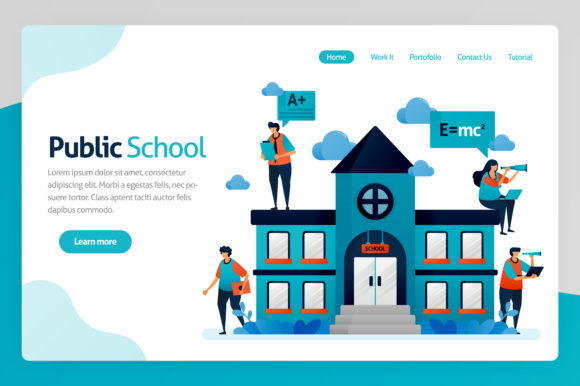
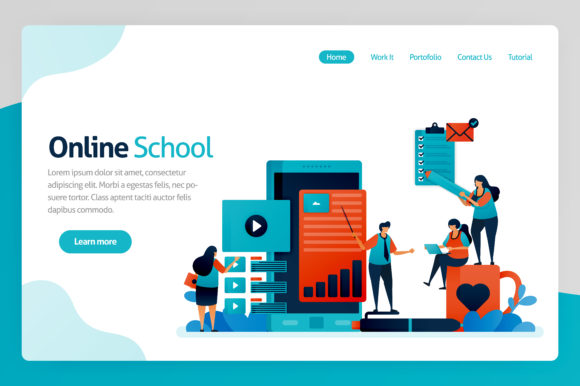
- Landing Pages and Websites: For ed-tech startups and online tutoring services, a compelling hero image featuring kids learning in school can instantly communicate the brand’s mission. An Illustration of Education for Children on a landing page reduces bounce rates by providing an immediate visual cue about the service’s target audience.
- Mobile Apps: In gamified learning apps, vector illustrations are used for buttons, backgrounds, and reward screens. Because vectors are lightweight, they ensure fast loading times, which is critical for maintaining user engagement on mobile devices.
- Banners and Posters: Marketing campaigns for preschools or educational workshops rely on eye-catching visuals. A vibrant banner featuring children engaged in a math lesson can attract parents’ attention at community centers or online ad networks.
- Printable Worksheets: Teachers often supplement digital lessons with physical materials. High-resolution JPGs derived from vector files allow for crisp printing of worksheets, flashcards, and coloring pages.
Technical Considerations: JPG vs. Editable EPS 10
When acquiring educational illustrations, understanding the file formats is crucial for maximizing their potential. Most premium resources include both JPG and editable EPS 10 files, each serving distinct purposes.
JPG (Joint Photographic Experts Group): This raster format is ideal for immediate use. If you need to upload an image to a social media post or insert it into a Word document quickly, the JPG file is ready to go. However, it has limitations regarding scalability and editing. Once saved, the pixels are fixed, and enlarging the image may result in blurriness.
EPS 10 (Encapsulated PostScript): This is the powerhouse format for professional designers. EPS 10 files are vector-based, meaning they are composed of mathematical paths rather than pixels. The "editable" aspect allows designers to:
- Change colors to match specific brand guidelines.
- Modify individual elements, such as swapping a book for a tablet in a character’s hand.
- Resize the illustration infinitely without quality loss.
- Separate layers for animation or interactive web design.
For businesses and creators, having access to the editable EPS 10 file ensures long-term flexibility. It allows for customization that keeps the content fresh and relevant to specific cultural or educational contexts.
Evaluating Suitability for Your Project
Not all illustrations are created equal. When selecting an Illustration of Education for Children for your project, consider the following criteria to ensure it aligns with your goals:
1. Cultural Inclusivity
Education is a global endeavor. Ensure that the characters depicted represent diverse backgrounds, abilities, and genders. This inclusivity helps all children feel seen and valued, fostering a positive learning environment.
2. Age Appropriateness
The complexity of the illustration should match the target age group. For preschoolers, simple shapes and bright primary colors are effective. For older elementary students, slightly more detailed scenes with realistic proportions may be more engaging.
3. Contextual Relevance
If the focus is on a mathematic lesson to count and number, the illustration should clearly depict numerical concepts. Avoid cluttered backgrounds that might confuse the learner. The visual hierarchy should guide the eye naturally from the character to the educational element.
Real-World Scenarios: Bringing Math to Life
Let us consider a practical example. A developer is creating a new mobile app designed to teach kindergarten students basic addition. Instead of using dry text-based problems, they integrate a flat character vector illustration of a friendly robot. The robot holds a basket of stars. As the child taps the screen, the stars animate and count up.
This scenario demonstrates the synergy between technology and design. The Illustration of Education for Children is not static; it is part of an interactive narrative. The use of vector graphics ensures that the robot looks sharp on both small phone screens and large tablet displays. Furthermore, because the file is editable, the developer can easily change the robot’s color for different levels of the game, keeping the visual experience dynamic.
Similarly, a preschool teacher might use a printed poster from the same illustration set to decorate the classroom. The poster features a group of diverse children solving a puzzle together. This reinforces social skills alongside academic ones, showing that education is both individual and communal.
Limitations and Best Practices
While illustrations are powerful, they are not a panacea. Over-reliance on visuals can sometimes hinder the development of abstract thinking if not balanced with other teaching methods. It is important to use illustrations as scaffolds—temporary supports that help learners reach higher levels of understanding before gradually removing them.
Additionally, when using editable files, maintain consistency. If you modify colors or elements, ensure they remain cohesive with the rest of your educational material. Inconsistent visual styles can be distracting and reduce the professional quality of your content.
Conclusion
The Illustration of Education for Children is a vital asset in modern pedagogy and digital design. By combining aesthetic appeal with educational functionality, these visuals enhance engagement, clarify complex concepts, and create inclusive learning environments. Whether you are a designer working on a mobile app, a marketer creating a banner, or an educator preparing classroom materials, understanding the value of flat character vector illustrations and their technical formats like EPS 10 is essential.
As we continue to innovate in the field of education, the demand for high-quality, versatile, and meaningful visual content will only grow. By choosing the right illustrations and using them strategically, we can make learning a more joyful and effective experience for children everywhere. Remember, the goal is not just to decorate but to facilitate understanding, one number, one character, and one lesson at a time.