Enhancing Digital Education with Vector Illustration for Online School Platforms
In the rapidly evolving landscape of digital education, visual communication has become as critical as the curriculum itself. Educators, instructional designers, and ed-tech entrepreneurs are constantly seeking ways to make complex information more accessible and engaging. This is where a Vector Illustration for Online School becomes an indispensable asset. Unlike raster images that lose quality when scaled, vector graphics maintain crisp edges and clarity across all devices, from large desktop monitors to small smartphone screens. This technical superiority, combined with aesthetic versatility, makes vector art the preferred choice for modern e-learning environments.
The Strategic Value of Scalable Graphics in E-Learning
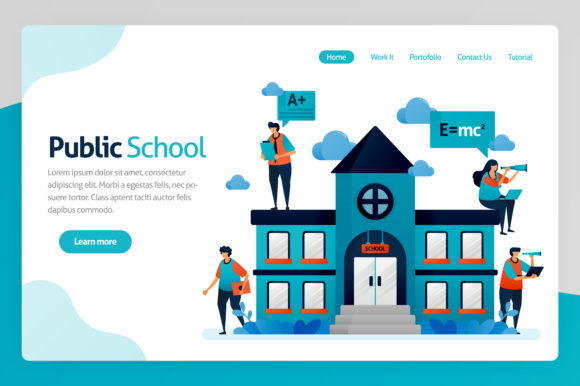
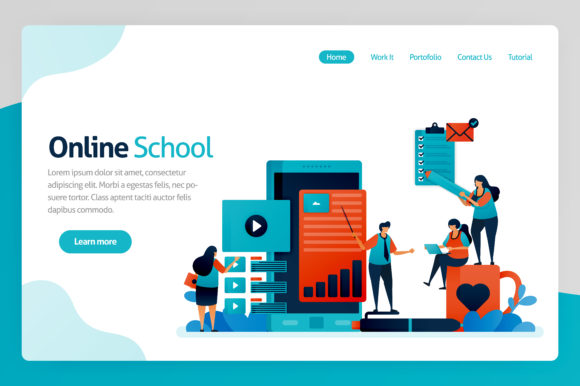
When developing a Vector illustration for online school landing page, the primary objective is to convey professionalism and clarity instantly. Visitors to an educational platform often make split-second decisions about whether the service meets their needs. High-quality visuals signal credibility. A well-crafted vector illustration can depict abstract concepts such as "distance learning" or "webinar lesson" in a way that feels approachable rather than intimidating.
The practical value lies in flexibility. Educational content is rarely static; it evolves with updates to courses, changes in branding, or expansions into new subject areas. Vector files, particularly those in editable EPS 10 format, allow designers to modify colors, shapes, and compositions without starting from scratch. This adaptability ensures that the visual identity of an online classroom remains consistent even as the underlying content grows. For marketers and small business owners, this means reduced long-term design costs and faster turnaround times for new promotional materials.
Key Characteristics of Effective Educational Vector Art
To understand why this specific type of graphic resource is worth discussing, one must look at its core characteristics. Effective educational vectors are not merely decorative; they are functional tools for communication. They typically feature clean lines, balanced compositions, and a color palette that supports readability rather than distracting from it.
- Clarity and Simplicity: The best illustrations avoid unnecessary clutter, focusing on the core message, whether it is a student interacting with a tablet or a teacher conducting a video tutorial.
- Universal Appeal: Characters and scenarios should be inclusive and relatable to a diverse global audience, reflecting the borderless nature of online education.
- Technical Compatibility: Files included in professional packages usually offer both JPG for immediate web use and editable EPS 10 for deep customization. This dual-format approach caters to both non-designers who need quick solutions and professionals who require full control.
These characteristics ensure that the illustration serves its purpose effectively, whether it is used as a homepage header, a background for a mobile app interface, or an icon set for a learning management system.
Real-World Application and Usability
In real-world use, the performance of these assets depends heavily on how well they integrate into the user experience. Consider a mobile app for education and learning. Screen real estate is limited, and load times are critical. Vector graphics, when properly optimized, offer superior performance because they are often smaller in file size compared to high-resolution photographs while providing infinite scalability. This ensures that icons and interface elements look sharp on retina displays without slowing down the application.
For a video tutorial or a live webinar lesson, static vectors can be animated to create dynamic explainer videos. Because vector paths are mathematically defined, they can be easily manipulated in animation software to highlight specific parts of a diagram or to guide the viewer’s eye through a step-by-step process. This capability transforms a static image into an interactive learning tool, enhancing retention and engagement.
However, usability also depends on the skill level of the user. While editable EPS 10 files offer immense power, they require knowledge of vector editing software like Adobe Illustrator or CorelDRAW. For freelancers and creators without this expertise, the included JPG files provide a ready-to-use alternative. It is crucial for buyers to assess their own technical capabilities before purchasing. If you lack design skills, relying solely on the editable features may lead to frustration. In such cases, choosing a template with a pre-balanced composition that requires minimal adjustment is a more practical strategy.
Who Benefits Most from These Resources?
The audience for a Vector Illustration for Online School is broad, but certain groups derive disproportionate value from these assets.
- Educators and Course Creators: Individuals creating independent courses on platforms like Udemy or Teachable often lack the budget for custom illustration commissions. Pre-made vector templates allow them to achieve a polished, professional look that competes with larger institutions.
- Ed-Tech Startups: New companies need to establish brand identity quickly. Using a cohesive set of vector illustrations for their landing pages and apps helps create a recognizable visual language without the time investment of hiring a full-time illustrator.
- Marketers and Bloggers: Content creators in the education niche need fresh visuals for articles, social media posts, and email newsletters. Vector assets can be recolored to match seasonal campaigns or specific topics, providing endless variation from a single source file.
- Small Business Owners: Tutoring centers or coaching services moving online can use these illustrations to soften the transition for clients accustomed to face-to-face interaction, making the digital environment feel warmer and more inviting.
Each of these groups benefits from the balance of quality and efficiency that vector illustrations provide. The ability to customize colors to match brand guidelines ensures that the final output feels bespoke, even if the base asset is a template.
Evaluating Quality and Long-Term Value
When assessing the quality of a vector package, look beyond the initial preview. Check the layer organization in the EPS file. Well-structured files with named layers and grouped elements save hours of editing time. Poorly organized files can make simple color changes a tedious process of hunting through hundreds of overlapping paths.
Reliability is another factor. Ensure that the fonts used in the illustration are either standard system fonts or included in the package. Missing fonts can break the layout when opening the file on different computers. Additionally, consider the style consistency. If you plan to use multiple illustrations across your site, they should share the same line weight, perspective, and color theory. A disjointed visual style can confuse users and undermine the perceived professionalism of your online classroom.
The long-term value of investing in high-quality vector assets lies in their reusability. A single homepage header template can be repurposed for banner ads, presentation slides, and printed brochures. This cross-media utility maximizes the return on investment. Unlike photography, which may require new shoots for different contexts, vector art can be endlessly recomposed to fit new needs.
Potential Limitations and Considerations
Despite their advantages, vector illustrations are not a universal solution. They may not be suitable for projects requiring photorealism or complex textures. If your brand relies on emotional storytelling through realistic human expressions, photographic imagery might be more effective. Vector characters, while charming, can sometimes appear generic if overused across the internet. To mitigate this, customization is key. Adjusting color palettes, adding unique brand elements, or combining vector elements with other media types can help maintain distinctiveness.
Furthermore, accessibility should not be overlooked. When using vectors for text-heavy infographics or diagrams, ensure that the contrast ratios meet WCAG standards. Decorative elements should not interfere with the readability of essential information. Always test your designs on various devices to ensure that details remain visible on smaller screens.
Final Thoughts on Integrating Vector Assets
Integrating a Vector Illustration for Online School into your digital strategy is a practical step toward enhancing user engagement and brand professionalism. Whether you are designing a homepage header web page template or creating assets for a mobile app for education and learning, the flexibility and clarity of vector graphics offer significant advantages. By understanding the technical requirements, recognizing the target audience, and applying thoughtful customization, you can leverage these resources to create a compelling and effective online learning environment. The key is to view these illustrations not just as decorative elements, but as functional components of a broader educational experience.