Optimizing the Online Education Application Interface for Modern Learners
The digital transformation of learning has moved beyond simple video lectures and static PDFs. Today, the cornerstone of effective remote learning is the Online Education Application Interface. This interface serves as the primary touchpoint between educators and students, dictating not just how content is delivered, but how it is experienced. As mobile devices become the dominant platform for internet access, the design of these applications must prioritize usability, accessibility, and aesthetic clarity. A well-crafted interface does more than display information; it facilitates engagement, reduces cognitive load, and creates a seamless pathway to knowledge acquisition.
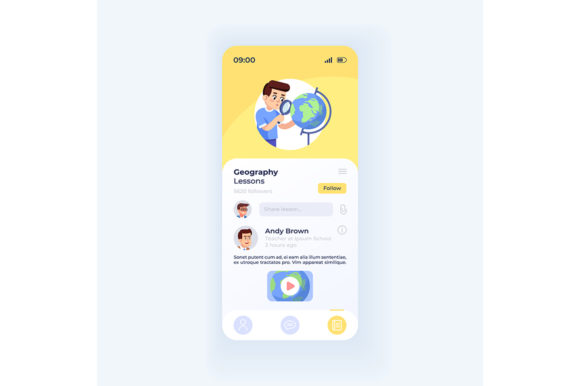
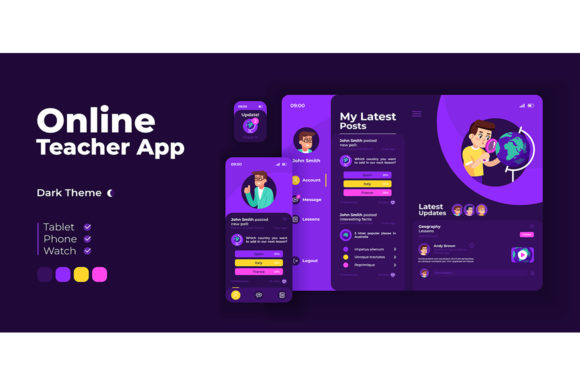
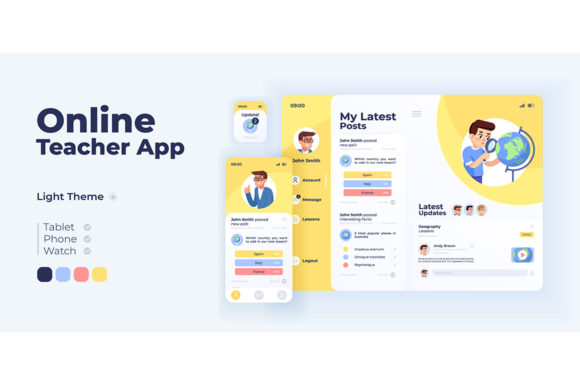
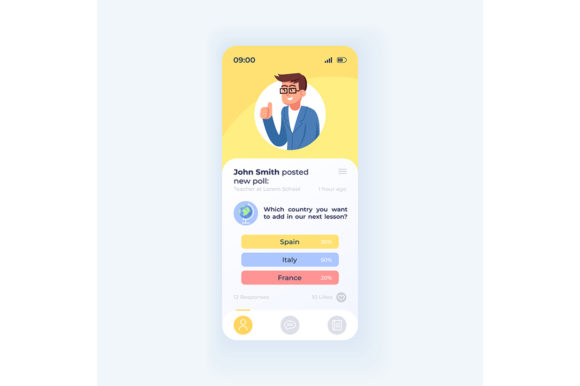
When developers and designers approach the creation of an educational app, they are often working with complex requirements. The need to balance rich media content with intuitive navigation is paramount. Consider the typical user journey: a student opens their smartphone to review a lesson, submit an assignment, or participate in a live discussion. If the layout is cluttered or the navigation is counterintuitive, the learning experience suffers immediately. This is why many professionals turn to specialized resources, such as an online education application smartphone interface vector template, to establish a solid foundation for their design process. These templates provide a structured starting point, ensuring that essential elements are placed logically while allowing for customization to fit specific brand identities.
The Importance of Light Theme Design in Educational Apps
One of the most significant trends in modern UI design is the prevalence of light theme layouts. While dark mode has gained popularity for entertainment and coding environments, the mobile app page light theme design layout remains the gold standard for educational contexts. There are several physiological and psychological reasons for this preference. Light backgrounds with dark text offer higher contrast ratios, which significantly improve readability, especially for long-form content. For students who may spend hours reading articles, reviewing notes, or taking quizzes, reducing eye strain is a critical consideration.
Furthermore, a light theme conveys a sense of cleanliness, openness, and professionalism. In an educational setting, these attributes help create a focused environment free from distractions. The use of white space, or negative space, is particularly effective in light themes. It allows the content to breathe, guiding the user’s eye naturally through the hierarchy of information. When designing a user post screen, for example, ample padding around text blocks and images ensures that the student’s attention remains on the material rather than being overwhelmed by visual noise. This approach aligns with principles of cognitive load theory, which suggests that minimizing extraneous processing helps learners retain information more effectively.
Flat UI and Its Role in Usability
The adoption of Flat UI for application design has revolutionized how users interact with digital platforms. Flat design strips away unnecessary stylistic elements such as gradients, shadows, and textures, focusing instead on simplicity and functionality. In the context of an online education platform, this minimalist approach offers distinct advantages. First, it enhances performance. Without heavy graphical assets, the application loads faster, which is crucial for users with varying internet speeds. Second, it improves clarity. Icons and buttons in a flat design are easily recognizable, reducing the time users spend figuring out how to navigate the app.
However, flat design does not mean bland design. Effective flat UI relies heavily on color theory and typography to create visual interest and hierarchy. Bright, contrasting colors can be used to highlight call-to-action buttons, such as "Submit Assignment" or "Join Live Class," ensuring that these critical functions are immediately apparent. Typography plays an equally important role, with clear, sans-serif fonts enhancing legibility across different screen sizes. By combining these elements, designers can create an interface that is both aesthetically pleasing and highly functional, supporting the diverse needs of students and educators alike.
The Teacher-Student Connection in Digital Spaces
A unique aspect of online education is the need to humanize the digital experience. The concept of an internet teacher on phone display highlights the importance of personal connection in remote learning. Unlike traditional classrooms where physical presence fosters community, online platforms must rely on design cues to establish trust and rapport. This can be achieved through the thoughtful integration of profile pictures, video thumbnails, and personalized feedback sections within the interface.
For instance, when a student views a lecture, seeing the instructor’s face in a corner of the screen can make the experience feel more interactive and less isolated. Similarly, discussion forums and comment sections should be designed to encourage dialogue, with clear indicators of who is speaking and easy ways to respond. These features transform the app from a mere content repository into a dynamic learning community. The design must facilitate these interactions seamlessly, ensuring that technical barriers do not hinder the social aspects of learning.
Leveraging Vector Templates for Efficient Development
Creating a high-quality interface from scratch is a time-consuming and resource-intensive process. This is where pre-designed assets, such as those found in a ZIP file contains EPS, JPG formats, become invaluable. Vector templates offer scalability and flexibility, allowing designers to resize elements without losing quality. EPS files are particularly useful for professional design software, enabling precise adjustments to layout and color schemes. JPG files, on the other hand, provide quick previews and can be used for presentations or initial stakeholder reviews.
Using these templates does not mean sacrificing uniqueness. Instead, they serve as a blueprint that can be customized to meet specific project requirements. Designers can modify color palettes to match institutional branding, rearrange modules to suit different pedagogical approaches, or add custom icons to enhance visual appeal. This hybrid approach combines the efficiency of pre-made components with the creativity of bespoke design, resulting in a polished product that meets high standards of quality and usability.
Key Features of an Effective User Post Screen
The user post screen is a critical component of any interactive educational platform. It is where students share insights, ask questions, and collaborate with peers. Designing this screen requires careful attention to detail to ensure it is both inviting and functional. Key features should include:
- Clear Input Fields: Text boxes should be prominently displayed with placeholder text that guides the user on what to write.
- Media Integration: Easy options to attach images, videos, or documents encourage richer contributions.
- Formatting Tools: Basic text formatting options like bold, italic, and bullet points help users organize their thoughts clearly.
- Visibility Controls: Options to choose who can see the post (e.g., public, class-only, private) empower users to manage their privacy.
- Feedback Mechanisms: Like buttons, comment threads, and upvote systems foster engagement and recognize valuable contributions.
By incorporating these elements, designers can create a post screen that encourages active participation and meaningful interaction. This not only enhances the learning experience but also builds a sense of community among users, which is essential for long-term engagement in online courses.
Future Trends in Educational Interface Design
As technology continues to evolve, so too will the expectations for online education interfaces. Emerging trends such as augmented reality (AR) and artificial intelligence (AI) are beginning to influence design decisions. AR can bring abstract concepts to life, allowing students to visualize complex structures in three dimensions. AI can personalize the learning experience by adapting content difficulty based on user performance. Integrating these technologies requires interfaces that are flexible and adaptable, capable of displaying dynamic content without compromising usability.
Moreover, accessibility will remain a top priority. Designers must ensure that their interfaces are usable by individuals with disabilities, adhering to standards such as WCAG (Web Content Accessibility Guidelines). This includes providing alternative text for images, ensuring keyboard navigability, and offering adjustable text sizes. By prioritizing inclusivity, educational platforms can reach a broader audience and provide equal opportunities for learning.
In conclusion, the design of an Online Education Application Interface is a multifaceted challenge that requires a deep understanding of user needs, pedagogical principles, and technical constraints. By leveraging tools like vector templates, adhering to best practices in light theme and flat UI design, and focusing on human-centric features, developers can create platforms that truly enhance the learning experience. As the demand for online education continues to grow, the importance of intuitive, engaging, and accessible interfaces will only increase, making this a critical area of focus for educators and technologists alike.