Education is the Most Powerful Weapon: Understanding Its Role in Personal and Global Change
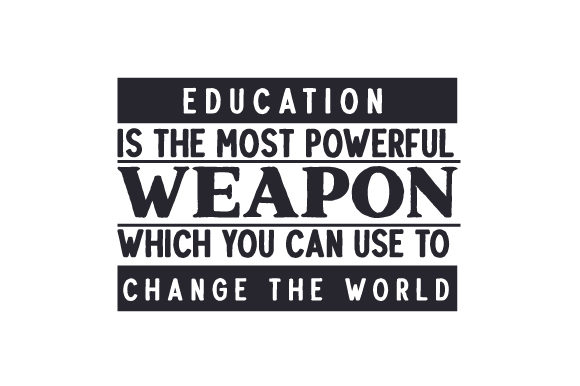
The assertion that Education is the Most Powerful Weapon is a sentiment famously attributed to Nelson Mandela, yet its relevance extends far beyond political rhetoric. For adults navigating career transitions, personal development, or civic engagement, this concept serves as a foundational principle for evaluating how knowledge translates into tangible influence. Unlike physical force or economic leverage, education operates as a transformative tool that reshapes perspectives, builds capacity, and fosters long-term resilience. However, treating education merely as a credentialing process overlooks its broader utility. To truly harness this power, one must understand what distinguishes deep, critical learning from superficial information acquisition.
When we examine Education is the Most Powerful Weapon through a practical lens, we are looking at a mechanism for systemic change. It is not simply about accumulating facts; it is about developing the analytical frameworks necessary to deconstruct complex problems. This distinction is crucial for individuals comparing different pathways for self-improvement or professional advancement. The "weapon" metaphor implies precision, strategy, and impact. Therefore, the value of education lies in its application—how it enables individuals to challenge status quos, innovate within their industries, and contribute meaningfully to societal progress.
Distinguishing Deep Learning from Information Accumulation
In the digital age, access to information is ubiquitous, but access to wisdom is not. Many people confuse the two, assuming that because they can search for answers instantly, they are educated. This is a critical misinterpretation of why Education is the Most Powerful Weapon. True education involves critical thinking, contextual understanding, and the ability to synthesize disparate pieces of information into coherent strategies. It is the difference between having a library of books and knowing how to write a new one.
Consider the tradeoffs between formal degree programs and self-directed learning. Formal education often provides structured curricula, accredited credentials, and networking opportunities, which are valuable for certain career paths. However, it can be rigid and slow to adapt to rapid technological changes. On the other hand, self-directed learning offers flexibility and immediacy but lacks the external validation and peer-reviewed rigor that traditional institutions provide. Neither approach is inherently superior; the right choice depends on the individual’s goals. If the objective is to enter a regulated profession like medicine or law, formal education is non-negotiable. If the goal is to master a emerging tech stack or creative skill, agile, self-directed study may be more effective.
Comparing Educational Approaches: Traditional vs. Experiential
When evaluating resources for personal growth, it is helpful to compare traditional academic models with experiential learning. Traditional models emphasize theory, history, and established principles. They build a strong foundation but may lack immediate practical application. Experiential learning, such as apprenticeships, internships, or project-based work, emphasizes doing. It provides immediate feedback and real-world context but may leave gaps in theoretical understanding.
The most effective practitioners often blend these approaches. They use formal education to understand the "why" behind industry standards and experiential learning to master the "how." For instance, a marketing professional might study consumer psychology theories in a university setting while simultaneously running A/B tests for a startup. This hybrid approach maximizes the potency of Education is the Most Powerful Weapon by ensuring that knowledge is both grounded and applicable. Readers should assess their current skill gaps and determine whether they need the structural depth of academia or the iterative speed of hands-on practice.
Strengths and Limitations of Education as a Tool for Change
Understanding the strengths of education helps in leveraging it effectively. Its primary strength is scalability and sustainability. Once a concept is learned, it can be applied repeatedly across various contexts without diminishing returns. Furthermore, education fosters empathy and cultural competence, which are essential for leadership in diverse environments. It empowers individuals to advocate for themselves and others, reducing dependency on external authorities.
However, there are limitations. Education alone does not guarantee success. It must be paired with action, resources, and opportunity. A highly educated individual without a platform or network may struggle to effect change. Additionally, there is the risk of "analysis paralysis," where excessive learning prevents decision-making. It is important to recognize when enough knowledge has been gathered to take action. The weapon is useless if it remains sheathed. Therefore, the timing of application is just as critical as the quality of the education itself.
When Education is the Right Choice and When It Is Not
Deciding whether to invest time and resources into further education requires a clear assessment of your objectives. Education is the Most Powerful Weapon when you are facing complex, ambiguous problems that require novel solutions. It is ideal for careers that demand continuous adaptation, such as technology, healthcare, and policy-making. In these fields, the landscape shifts rapidly, and static knowledge becomes obsolete quickly. Continuous learning is not just an advantage; it is a necessity for survival.
Conversely, education may not be the immediate priority if the barrier to entry is purely financial or logistical. For example, starting a small service-based business may require more capital and operational discipline than additional coursework. In such cases, practical experience and mentorship might yield faster results than formal study. Similarly, if an individual is suffering from burnout, taking a break to rest and reflect may be more beneficial than pursuing another certification. Recognizing these nuances prevents the misuse of educational pursuits as a form of procrastination or avoidance.
Evaluating Resources: Quality Over Quantity
With countless courses, books, and programs available, discernment is key. Not all educational resources are created equal. When selecting materials, look for credibility, relevance, and alignment with your learning style. Check the credentials of instructors, read reviews from past participants, and ensure the content is up-to-date. Avoid programs that promise quick fixes or guaranteed outcomes without effort. True education requires engagement and critical inquiry.
Consider the format that best suits your lifestyle. Some learners thrive in interactive, cohort-based environments where peer discussion enhances understanding. Others prefer solitary, self-paced study that allows for deep focus. There is no one-size-fits-all solution. The goal is to find a resource that challenges you appropriately without overwhelming you. Remember, the effectiveness of Education is the Most Powerful Weapon depends largely on the user’s commitment to applying what they have learned.
Making an Informed Decision
Ultimately, viewing Education is the Most Powerful Weapon as a strategic asset rather than a passive obligation changes how you approach learning. It encourages proactive selection of skills and knowledge that align with your values and goals. Whether you are considering a return to university, enrolling in a specialized workshop, or committing to a daily reading habit, evaluate the potential return on investment in terms of personal fulfillment and professional impact.
Ask yourself: What specific problem am I trying to solve? How will this knowledge enhance my ability to contribute to my community or industry? Am I prepared to apply this learning in practical ways? By answering these questions honestly, you can avoid the trap of collecting certificates and instead focus on building capabilities. Education, when used wisely, dismantles barriers, opens doors, and empowers individuals to shape their own destinies. It is not just a tool for personal gain but a catalyst for collective progress. Choose your educational path with intention, and wield this weapon with responsibility and vision.